- 1. Google Gemini: The Intelligence Layer Behind Every Ad
- 2. ChatGPT / OpenAI: The New Challenger Ad Platform
- 3. Meta: The Race to Full Automation
- 4. Pinterest: High-Intent Discovery at Scale
- 5. TikTok: AI-Powered Creative at Velocity
- 6. LinkedIn: Professional Targeting Grows Stronger
- The Bigger Picture: What All of This Means for Advertisers
- 1. Conversational Surfaces Are Becoming Commercial Surfaces
- 2. Creative Is Now a Data Input, Not a Deliverable
- 3. Keywords Are Losing Primacy
- 4. Automation Is Expanding, But Strategic Judgment Matters More Than Ever
- 5. The AI Mix Is the Strategy
- Ready to Build Your AI-First Advertising Strategy?
AI & Automation
AI in Online Advertising: Top Trends in 2026
By Shraddha
published May 28, 2026
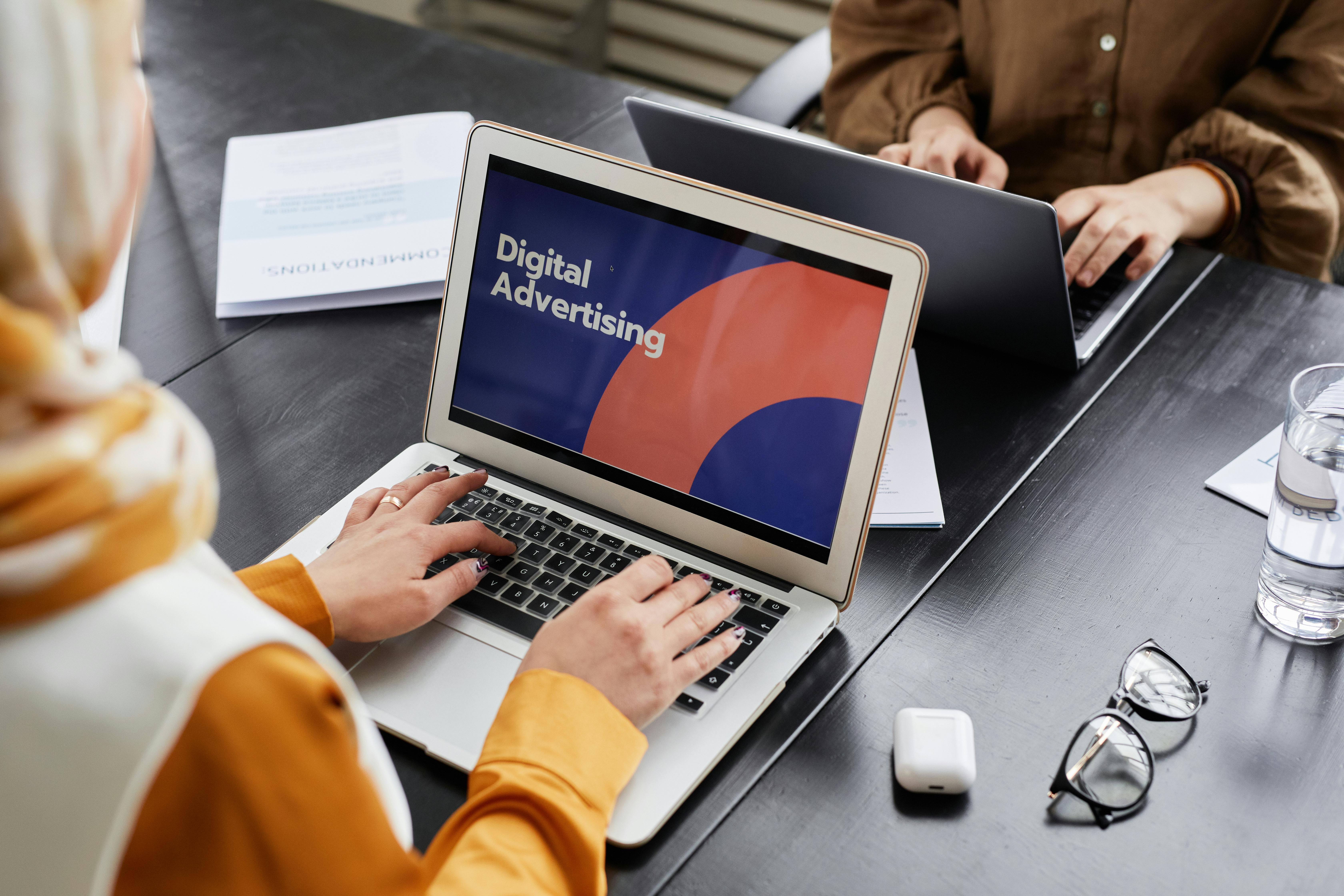
If you've run a paid campaign recently and noticed the rules feel different, you're not imagining it. In 2026, artificial intelligence has moved from a "nice to have" add-on to the operating system of every major advertising platform. From Google rebuilding its entire ad stack around Gemini, to OpenAI launching a self-serve ad marketplace on ChatGPT, to Meta pushing toward campaigns that practically run themselves — the year has delivered a historic reshaping of how brands reach people online.
This isn't incremental progress. It's a structural shift. The advertisers who understand what each platform is building — and how to use these tools in combination — are pulling ahead fast.
Here's a comprehensive breakdown of what's happening across every major platform, what it means for your brand, and why your next best move is building an AI-first advertising strategy.
1. Google Gemini: The Intelligence Layer Behind Every Ad
Google's Google Marketing Live 2026 event made one thing unmistakably clear: Gemini is no longer just a chatbot — it's the connective tissue running through Google Ads, Analytics, Merchant Center, YouTube Shopping, and Search alike.
The headline announcement was the arrival of AI Mode ads, two entirely new ad formats built specifically for Google's conversational search experience. AI Mode queries are already triple the length of traditional search queries on average, and volume has more than doubled every quarter since launch. That signals something important: users inside AI Mode aren't passively browsing. They're deep in a research or purchase decision, making this one of the highest-intent advertising surfaces ever created.
The first new format, Conversational Discovery, surfaces ads within the flow of an AI-generated answer. The second, Business Agent for Leads, replaces static lead forms with a Gemini-powered chat agent embedded directly inside the ad. A prospective customer researching a complex purchase can get their questions answered by your brand in real time, without ever clicking away.
Beyond AI Mode, Google upgraded its Asset Studio with multimodal Gemini-powered creative generation. Advertisers can now use natural language prompts to produce images, copy, and video assets — dramatically cutting creative production time. The company also launched Ask Advisor, a unified Gemini assistant connecting Google Ads, Analytics, Merchant Center, and the Google Marketing Platform into a single conversational interface for campaign planning and optimisation.
On the commerce side, Google expanded its Universal Commerce Protocol (UCP) and Universal Cart, integrating AI-powered checkout into Demand Gen campaigns, YouTube Shopping ads, and AI Mode experiences. The Direct Offers pilot — running since January 2026 with brands like Chewy, Gap, and L'Oréal — is now gaining AI-generated bundle construction, native checkout, and a travel expansion with Booking.com and Expedia.
The strategic takeaway: Google is no longer selling ad placements. It is selling AI-orchestrated customer journeys, from the first conversational query to the completed purchase.
2. ChatGPT / OpenAI: The New Challenger Ad Platform
If Google's announcement was the year's biggest evolution, OpenAI's entry into advertising was its biggest disruption.
On January 16, 2026, OpenAI confirmed that ads were officially coming to ChatGPT, initially rolling out to Free and ChatGPT Go tier users in the United States. By February 9, the launch was live. By May 5, OpenAI had opened a self-serve Ads Manager in beta — eliminating the previous $50,000 minimum spend requirement and opening the platform to businesses of all sizes.
The numbers behind the platform are staggering: ChatGPT now processes approximately 2.5 billion daily prompts, with over 800 million weekly active users. In its first six weeks of advertising, the platform reportedly generated $100 million in revenue.
What makes ChatGPT ads structurally different from search or social ads is the context in which they appear. Users on ChatGPT are actively problem-solving, researching, and making decisions — not passively scrolling. Ads appear below the chatbot's responses, clearly labelled as sponsored content, contextually matched to the conversation happening in real time.
The May 2026 platform updates introduced cost-per-click (CPC) bidding alongside the existing CPM model, expanded measurement tools including a Conversions API and measurement pixel (OAIQ), daily budget controls, geographic targeting, and dynamic call-to-action options. OpenAI has also announced plans to expand the pilot to the UK, Mexico, Brazil, Japan, and South Korea in the coming weeks.
A critical point for advertisers: OpenAI explicitly does not share conversation content or personal user data with advertisers. Targeting is contextual rather than identity-based — which means creative relevance and intent-matching are the primary levers for performance.
OpenAI has also signalled upcoming features including voice-enabled ads (leveraging its advanced voice technology to enable natural, conversational ad interactions), direct-to-chat purchasing, and CRM integration with platforms like Salesforce and HubSpot for closed-loop attribution.
3. Meta: The Race to Full Automation
Meta's advertising transformation in 2026 isn't about new features. It's about the direction of travel — toward a future where running an ad campaign requires nothing more than a URL and a budget.
Mark Zuckerberg's stated vision is a platform where businesses supply their objective and payment method, and Meta's AI handles creative generation, audience selection, placement optimisation, and budget allocation autonomously. That vision is closer to reality than most advertisers realise.
The Advantage+ suite now supports end-to-end AI-automated campaigns, with early adopters reporting up to 32% reduction in cost-per-acquisition after migrating from fragmented campaign structures. Meta's Andromeda ad retrieval system has overhauled how ads are matched to users, while the generative recommendation model, Meta GEM, is driving measurable improvements in conversions.
On the creative side, Meta has introduced persona-based creative generation — a system that produces multiple ad variations, each tailored to a different audience segment (value-seekers vs. style-driven buyers, for example), rather than serving one generic creative to all users. An image-to-video tool now lets advertisers turn up to 20 product photos into polished, multi-scene video ads without external production teams.
January 2026 brought another major expansion: Threads advertising rolled out globally to all users, giving brands access to the platform's 400 million monthly active users through image, video, and carousel formats — integrated into both manual setup and Advantage+.
At ShopTalk 2026, Meta announced new AI-powered product discovery features for Instagram. Creators can now add up to 30 shoppable products in a single Reel, while Facebook is rolling out affiliate partnerships starting with Amazon in the US.
The May 2026 updates added AI Instant Forms (generating lead forms directly from a URL), a Perplexity connector, expanded 730-day purchase audiences, and a new AI agent inside Ads Manager for conversational campaign performance queries.
The net effect: Meta is systematically moving decision-making from the advertiser to the machine. For brands that trust the system with strong creative inputs and clean first-party data, the efficiency gains are real.
4. Pinterest: High-Intent Discovery at Scale
Pinterest occupies a unique position in the advertising ecosystem: a platform where users arrive with commercial intent built in. More than 80 billion searches happen on Pinterest every month — and over half are commercial in nature. With 631 million monthly active users as of Q1 2026, and revenue surpassing $1 billion in a single quarter for the first time, Pinterest's AI-powered ad stack is quietly becoming one of the most valuable tools in a performance marketer's arsenal.
The platform's most significant recent launch is Promote a Pin, introduced on March 24, 2026. The feature allows anyone — from solo creators to enterprise brands — to boost existing content within a few taps, with no prior advertising experience required. It runs on Pinterest's Taste Graph system, a proprietary AI model trained on billions of images to identify users who are most likely to convert.
In January 2026, Pinterest launched its Media Planner, eliminating manual media planning complexity for brands. The updated Trends tool has also been overhauled to help advertisers predict what users are planning to purchase next, drawing on signals from saves, curation behaviour, and shopping activity.
Pinterest's Ad Labs programme continues to push creative frontiers, with AI-powered auto-collages that can turn a brand's product catalogue into thousands of shoppable collages within minutes — a format that early testing showed was saved twice as often as standard Pins.
For brands in fashion, beauty, home décor, food, travel, and lifestyle, Pinterest's combination of high purchase intent, AI-powered discovery, and visual-first formats makes it one of the most underutilised high-ROI platforms available.
5. TikTok: AI-Powered Creative at Velocity
TikTok's sixth annual TikTok World summit in May 2026 delivered one of the most comprehensive advertising platform overhauls in the company's history, structured around a clear thesis: AI should turn content discovery into measurable business outcomes.
The headline creative update is Symphony AI — a suite of tools that can generate complete video ads from a text prompt, significantly reducing the cost and time required for TikTok-native content. Alongside this, TikTok launched a Creator AI Search inside TikTok One, its creative command centre, that allows brands and agencies to find the right talent by interpreting campaign briefs and analysing creator profiles.
New ad formats include Branded Buzz, which enables advertisers to orchestrate large-scale creator collaborations — think 300 creators, thousands of videos, and millions of views launched simultaneously around a product moment. Search Hubs gives brands their own branded destination at the top of TikTok Search results pages. TopReach Creative Sequencing combines TikTok's two highest-visibility placements (TopView and TopFeed) into a single buy, allowing advertisers to tell a continuous narrative the moment users open the app.
Perhaps most forward-looking: TikTok has launched an MCP (Model Context Protocol) server that allows AI agents to run and manage campaigns autonomously. This positions TikTok as the first major social platform with a direct, programmatic interface designed specifically for AI-powered media buying.
Smart+ — TikTok's AI-automated campaign system — has been updated with expanded manual control options and new measurement integrations, giving advertisers greater transparency without sacrificing automation efficiency.
6. LinkedIn: Professional Targeting Grows Stronger
LinkedIn continues to demonstrate that B2B advertising is very much part of the AI revolution. Revenue grew 12% year-over-year in Q1 2026, with new features expanding its reach beyond the platform itself.
Off-Platform Event Ads now let marketers promote LinkedIn events across external surfaces, expanding the distribution of event-led demand generation campaigns. LinkedIn has also improved people discovery with smarter search tools — valuable for advertisers building highly specific professional audience segments. The platform's LinkedIn Labs division launched Crosscheck, a tool for information verification and credibility assessment, reflecting the growing importance of content quality signals in the feed algorithm.
For B2B brands, LinkedIn's combination of professional first-party data, decision-maker targeting, and growing AI-assisted campaign tools remains unmatched for reaching buyers in complex sales environments.
The Bigger Picture: What All of This Means for Advertisers
Across every platform, five structural shifts are defining advertising in 2026:
1. Conversational Surfaces Are Becoming Commercial Surfaces
AI Mode on Google, ChatGPT ads, and Pinterest's shoppable discovery are all collapsing the distance between the moment of intent and the moment of purchase.
2. Creative Is Now a Data Input, Not a Deliverable
AI systems on Meta, TikTok, and Google are generating and optimising thousands of creative variants simultaneously. The advertiser's job is to feed the machine with strong brand direction, clear product information, and high-quality visual assets.
3. Keywords Are Losing Primacy
Google's AI Max campaigns eliminate keyword targeting entirely, using Gemini to match landing pages with user intent signals. ChatGPT's contextual targeting operates without keywords altogether. The implication: optimising for intent and relevance matters more than keyword lists.
4. Automation Is Expanding, But Strategic Judgment Matters More Than Ever
Platforms are taking over execution. The competitive advantage now lives upstream — in choosing the right platform mix, allocating budget intelligently across the AI ecosystem, and knowing which signals to feed each system.
5. The AI Mix Is the Strategy
No single platform wins. The brands generating the strongest returns in 2026 are those who understand how Google, Meta, ChatGPT, Pinterest, TikTok, and LinkedIn each serve a different role in the customer journey — and who have a coordinated strategy across all of them.
Ready to Build Your AI-First Advertising Strategy?
The platforms are moving fast. The tools are powerful. But having access to AI-driven advertising and knowing how to deploy it strategically are two very different things.
Lean Summits is India's AI-first marketing agency — built from the ground up to help brands navigate, combine, and maximise the AI advertising ecosystem. We don't bolt AI onto traditional workflows. We architect campaigns around it, from choosing the right platform mix to feeding your brand's intelligence into every automated system.
Whether you're trying to unlock ChatGPT's intent-driven audiences, scale Meta Advantage+ without losing brand control, win in Google's AI Mode, or build a full-funnel strategy across the AI advertising mix — we bring the expertise, the tools, and the strategic framework to make it work.
Let's map out your AI advertising strategy. Connect with Lean Summits today for a free platform audit and discover which AI advertising channels are the right fit for your goals, your audience, and your budget.
Lean Summits — AI-First Marketing for Brands That Want to Win in 2026 and Beyond.
 Shraddha