
- The Shift No One Is Ready For
- What Google Is Likely Announcing at I/O 2026
- AI Mode Becomes the Default
- Project Mariner Becomes a Real Product
- Monetization Unlocks Everything
- Android XR Brings Search to New Surfaces
- Why This Is Bigger Than Featured Snippets or SGE
- The Real Impact on Businesses
- For SEO Teams
- For Brands
- For Agencies
- The New Playbook: How to Win in AI Mode
- Generative Engine Optimization (GEO)
- Content That Feeds AI
- Distribution Beyond Google
- Brand as a Signal
- Monetization: The Hidden Lever Behind Everything
- What the Next 12 Months Look Like
- You Can't Rank Your Way Out of This One
Blog
Google AI Mode Is About to Change Search Forever: What Marketers Must Do Before It's Too Late
By Shraddha
published May 11, 2026
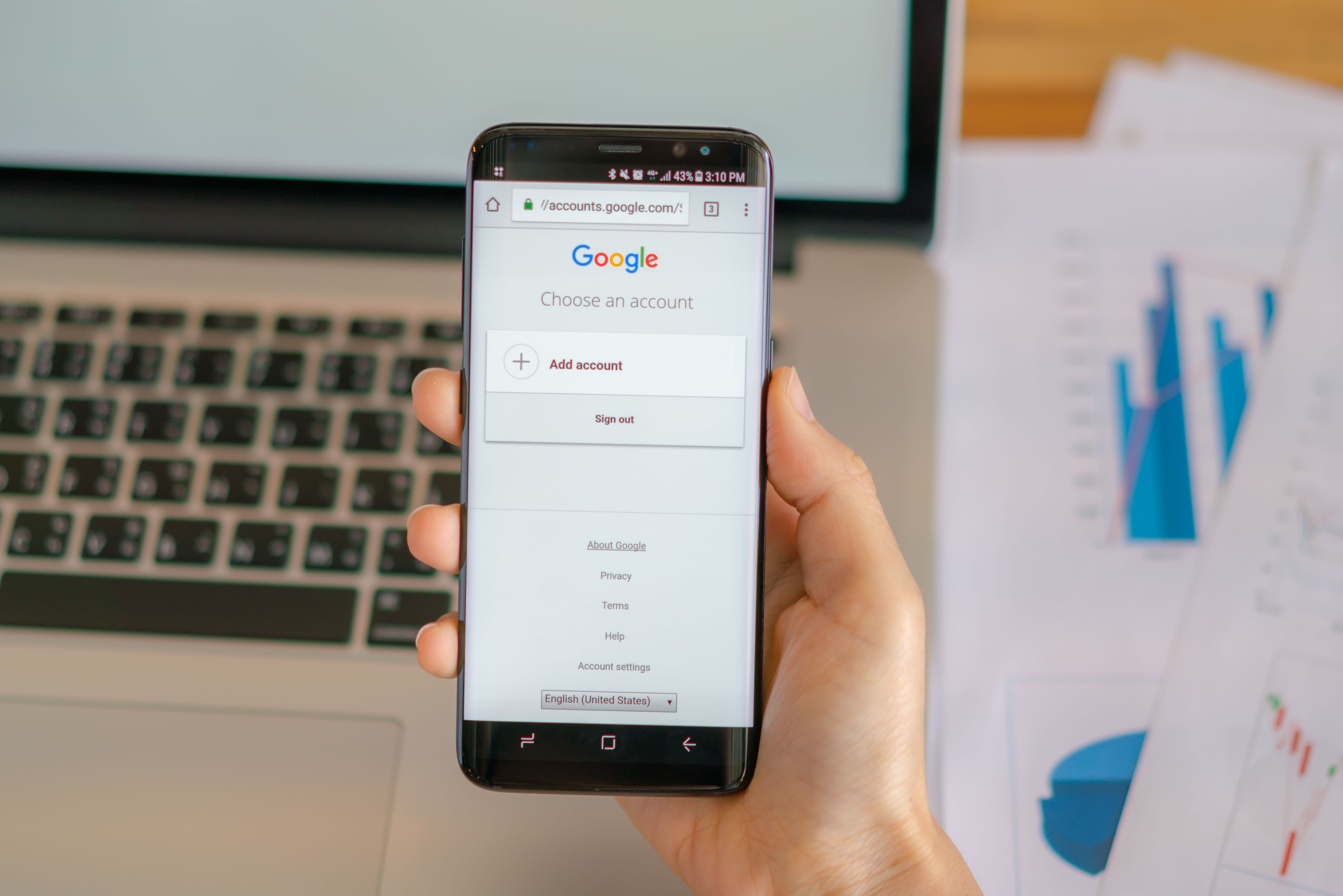
This is not an update. This is Google redesigning the internet's entry point—and most businesses are not prepared.
The Shift No One Is Ready For
Picture this: A potential customer types your most valuable keyword into Google — the page loads. An AI gives them a comprehensive, confident answer—with sources, follow-up suggestions, and even a task completed on their behalf. They never scroll. They never click. Your website, sitting at position one for the last three years, receives zero visits.
This is not a hypothetical future. It is the architecture Google is actively building, and on May 19th at Google I/O 2026, the company is expected to make it official.
Google has been quietly expanding AI Mode in Search for months. The rollout has been deliberate, cautious even—held back primarily by one unsolved problem: how do you monetize an experience where users stop clicking on ads? That answer, according to every signal Google has given, is now within reach. And once monetization is cracked, there is no reason for Google to hold back.
Most SEO teams are still optimizing for the old game. Most brands are still chasing rankings. Most agencies are still selling monthly keyword reports. The ground beneath all of it is about to give way.
What Google Is Likely Announcing at I/O 2026
AI Mode Becomes the Default
For most users, Google AI Overviews will no longer be a box at the top of the page—they will be the page. Traditional blue links will still exist, but they will migrate so far down the interface that for the majority of queries, they will effectively be invisible. Google has been testing this layout aggressively. I/O 2026 is the moment they formalize it.
The implications are immediate. If your entire digital strategy depends on organic search traffic, you are about to experience what print advertisers felt when the internet arrived: not a warning shot, but a structural shift.
Project Mariner Becomes a Real Product
Last year, Google previewed Project Mariner—an AI agent capable of browsing the web, filling out forms, and completing tasks on a user's behalf. It was impressive as a demo. At I/O 2026, expect Google to announce this as a real, usable product beginning to roll out to consumers.
What does an AI agent mean for search? It means Google doesn't just answer questions—it acts on them. A user asking "book me a table at a good Italian restaurant nearby" doesn't visit a restaurant website, an OpenTable listing, or a Yelp page. The agent does it for them. The entire discovery-to-conversion funnel, which businesses have spent decades optimizing, gets compressed into a single AI action that bypasses almost every touchpoint they've built.
Monetization Unlocks Everything
The reason AI Mode hasn't gone fully default yet is not technical—it's financial. Google's ad revenue depends on clicks, and AI answers reduce clicks. But Google has been quietly working on a new monetization layer: sponsored AI responses, paid inclusion in AI-generated answers, and conversational ad formats that feel native to an AI interaction rather than bolted onto it.
When Google announces the monetization model at I/O—and they will, because they have to in order to justify going all-in—it removes the last barrier to making AI Mode universal. The rollout that follows will not be gradual.
Android XR Brings Search to New Surfaces
Last year Google previewed Android XR for wearables. Expect I/O 2026 to introduce mass-market XR devices—glasses or lightweight headsets built for everyday use. This is not just a hardware story. It is a new search surface, one where a screen-based results page is architecturally impossible. In an XR environment, AI-spoken answers are not a feature. They are the only interface that works.
Every new surface Google captures with XR is a surface where traditional search results never had a chance to exist—and where AI-first visibility is the only kind that matters.
Why This Is Bigger Than Featured Snippets or SGE
When featured snippets arrived, marketers panicked. When Google's Search Generative Experience launched in beta, agencies sent alarmed newsletters. Both times, the threat was real but incomplete—traditional rankings still mattered, clicks still flowed, and businesses adapted with incremental changes.
This is different.
Featured snippets pulled one answer above the results. AI Mode replaces the results. SGE was an experiment with an opt-out. AI Mode will be the default with no equivalent escape hatch for users—or for brands.
The "10 blue links" model was the internet's handshake with businesses for three decades. It said: earn a ranking, get traffic. That handshake is being revoked.
Search is transitioning from a discovery engine to an answer engine. Websites go from being the destination to being the source material—cited or ignored, never visited. The entire value proposition of organic search, which has underpinned digital marketing budgets for a generation, is being dismantled and rebuilt around a model where visibility and traffic are no longer the same thing.
Organic click-through rates are already declining. AI Mode as default will accelerate that decline to a cliff edge for many categories.
The Real Impact on Businesses
For SEO Teams
The core metric SEO has always sold—rankings—is about to become deeply misleading. You can rank number one for a high-volume keyword and receive a fraction of the traffic you received two years ago, because the AI answer above you absorbed the demand.
The new question is not "Do we rank?" but "Are we cited?" Being included in an AI-generated answer requires a different kind of optimization entirely. It requires your content to be structured in a way that AI systems can parse, trust, and excerpt. It requires your brand to carry enough authority that Google's systems treat you as a credible source worth surfacing. Page one is being replaced by mention one—and the rules for earning a mention are not the same as the rules for earning a ranking.
SEO teams that don't restructure their measurement frameworks, their content briefs, and their technical standards in the next twelve months will be handing clients vanity metrics while their traffic quietly erodes.
For Brands
The biggest shift for brands is the reversal of keyword logic. For years, the game was: identify what people search, create content around those searches, rank, capture traffic. AI Mode breaks that loop. The AI already knows what people search. It provides the answer itself. What it doesn't generate from scratch is authority—trust signals, brand credibility, domain expertise that makes a source worth citing.
This means brand investment is no longer a soft, hard-to-measure complement to performance marketing. It becomes a direct input into AI search visibility. Brands that have built genuine authority—through press mentions, industry recognition, consistent original research, and trusted expert voices—will find themselves cited in AI answers. Brands that have optimized purely for keywords and backlinks, without building the underlying substance that generates real authority, will find themselves invisible.
For Agencies
The traditional SEO agency deliverable—rankings report, keyword movement, backlink analysis—is becoming a rearview mirror. Clients will start asking uncomfortable questions: "We're ranking higher, so why is our traffic falling?" The agencies that don't have an answer beyond "algorithms change" will lose those clients.
The agencies that survive and grow in the AI Mode era are the ones that transition from ranking-centric reporting to visibility-and-authority reporting. That means new tools, new frameworks, new metrics, and new skills. It means understanding how large language models evaluate credibility, how structured data feeds AI systems, and how brand authority gets built in ways that AI systems recognize. The agencies that start building this capability now will have an insurmountable head start on those that wait.
The New Playbook: How to Win in AI Mode
Generative Engine Optimization (GEO)
GEO is not a rebrand of SEO. It is a fundamentally different discipline. Where SEO optimized for crawlers ranking pages by relevance, GEO optimizes for AI systems selecting sources by authority and citeability.
Entity-based SEO is the foundation. AI systems don't think in keywords—they think in entities, relationships, and credibility signals. Your brand, your key people, your products, and your areas of expertise need to exist as recognized entities in the information ecosystem that AI systems draw from. This means structured data, knowledge graph presence, consistent entity mentions across credible sources, and content that positions your brand as the definitive voice on specific topics.
Stop optimizing for ranking positions. Start optimizing for inclusion in answers.
Content That Feeds AI
The content that gets cited in AI answers shares specific characteristics. It is structured—organized with clear headings, logical flow, and scannable summaries that AI systems can excerpt cleanly. It is authoritative—grounded in original data, expert perspective, or primary research that gives it credibility beyond what AI can generate on its own. And it is quotable—containing specific, standalone claims, statistics, and insights that an AI can lift and attribute without distortion.
Generic content that restates what's already on the web will not be cited. It will be absorbed and paraphrased without credit. The only content that survives AI Mode is content that brings something new to the table: a proprietary study, a genuine expert perspective, a framework or model that originates with your brand.
First-party data is now a competitive moat. If your brand can produce original research that AI systems can cite, you become a source. Everything else becomes background noise.
Distribution Beyond Google
For the first time in the internet era, Google cannot be the default distribution strategy. AI agents may bypass search entirely—completing tasks through direct API connections, partner integrations, or pre-trained knowledge that never touches a search results page.
Brands need to build owned channels—email lists, communities, podcast audiences, direct relationships—that do not depend on Google's algorithms to mediate the connection between brand and customer. The brands that enter the AI Mode era with strong owned audiences will weather the organic traffic collapse. The brands that are entirely Google-dependent will not.
Brand as a Signal
In the AI Mode world, brand is not a marketing concept. It is a ranking factor. AI systems are trained to cite sources that real people trust and talk about. That means press coverage matters. Industry recognition matters. Expert citations matter. Word-of-mouth, at scale, creates the ambient signal that tells AI systems your brand is worth referencing.
Invest in building the kind of brand that gets talked about, cited, and referenced—not just the kind that ranks well for target keywords. Those are increasingly different investments, and only one of them will pay off in the world Google is building.
Monetization: The Hidden Lever Behind Everything
The monetization question is the key to understanding why everything is happening now. Google has always known AI Mode was the future. The reason it hasn't gone fully default is straightforward: their $200 billion-plus annual ad business runs on clicks, and AI Mode reduces clicks.
But watch carefully for what Google announces on May 19th. The most likely model is a tiered paid inclusion system—where brands can pay to be featured as cited sources within AI answers, with clear labeling but premium placement. Think of it as sponsored citations rather than sponsored links. A user asks about the best CRM software; a paid source appears within the AI answer alongside organic citations.
Conversational ad formats are also likely—AI answers that naturally incorporate brand mentions when relevant, with the brand having paid for inclusion in that context. The key distinction from traditional ads is that these will be designed to feel helpful within the AI response, not interruptive.
The moment Google announces a viable monetization path for AI Mode, the last internal brake on full rollout is released. Everything accelerates from that announcement forward.
What the Next 12 Months Look Like
The businesses that treat the next twelve months as business-as-usual for SEO will look back on this period as the moment they fell irreversibly behind.
Expect organic click-through rates to drop 30 to 50 percent in information-heavy categories—finance, healthcare, legal, software, travel—where AI can answer most queries comprehensively without sending users anywhere. E-commerce and transactional searches will be more resilient initially, but AI agents will begin to erode even those categories as agentic shopping becomes more capable.
AI-first content strategies will become a standard line item in marketing budgets. The brands that invest now in original research, structured authority content, and entity-building will have a compounding advantage. AI systems, like search engines before them, favor established sources. The time to become an established source is before the new system is fully dominant—not after.
Agencies will bifurcate sharply. Those that pivot to GEO, brand authority building, and AI visibility measurement will capture the next wave of marketing spend. Those that sell the old playbook will face client churn and commoditization pressure they cannot escape.
The window to get ahead of this is not years. Based on what Google is expected to announce on May 19th, it is months.
You Can't Rank Your Way Out of This One
The brands that will win in the AI Mode era are not the ones with the most backlinks or the highest domain authority under the old model. They are the ones that built genuine expertise, earned real authority, and structured their content to be cited rather than merely ranked.
If your SEO strategy still depends on rankings as its core output, you are already optimizing for a metric that is losing its connection to business results. The businesses arriving at this realization in 2027 will be years behind the ones acting on it today.
At Lean Summits, we help brands make this transition—from ranking-centric SEO to AI-first visibility strategies built for the world Google is actively creating. The playbook exists. The only question is whether you start running it before or after your competitors do.
The shift is not coming. It is here. The question is whether your brand is built to be cited—or built to be ignored.
Ready to build an AI-first visibility strategy before the window closes? Let's talk.
 Shraddha