As AI capabilities continue to evolve, it has transformed from an email-writing tool to a goal-driven system capable of controlling entire marketing campaigns. Its increasing usage by marketing teams is driven by the rise of AI agents for marketing automation. Gartner reports that around 40% of enterprise applications will feature similar AI agents by the end of 2026.
What are these AI agents? To put it simply, these are autonomous software programs designed to execute complex marketing tasks on their own. They are capable of performing AI workflow automation and using autonomous marketing tools to improve marketing efficiency. This leads to more responsive campaigns that optimize themselves to deliver the best ROI.
Moreover, almost 90% of all B2B purchasing details are projected to be guided by AI agents in 2028. This means that, to reach buyers in the near future, you will need to optimize your marketing operations for machine-to-machine interactions. Marketing campaigns governed by AI agents will therefore also help your advertising to reach the right buyer channels recommended by AI.
What Tasks Can AI Agents Automate?
It is truly astounding how quickly AI has evolved from basic chatbots to advanced agents. Compared to the reactive input-based conversations of AI chatbots, AI agents for marketing automation are significantly smarter. They are capable of thinking on their own and designing entire marketing campaigns that satisfy your requirements.
For example, you can easily say, “increase the user traffic of the website by 15% this quarter,” and the AI agent can automatically create and execute a plan to achieve it.
Here are some other ways AI workflow automation can help achieve critical marketing functions:
- Intelligent Lead Management
AI agents can monitor website traffic in real time and accurately identify high-intent visitors based on their behavior. This allows them to instantly select these users for personalized outreach sequences that are sent via email or LinkedIn.
This real-time personalized outreach ensures that no high-value customer is overlooked during the marketing campaign.
- Dynamic Content and Campaign Creation
These automated agents can use AI to go beyond simple copy suggestions, offering variants of entire campaigns. They can produce multiple versions of a landing page, each tailored to a specific industry, user persona, or geography. What was once a week-long marketing exercise now become a simple one-click prompt using AI agents.
- Predictive Campaign Optimization
AI agents are capable of fulfilling the role of tireless analysts. They can monitor your marketing performance data in real time, conduct A/B tests, and efficiently adjust copy and email sequences. Unlike human review, which requires server downtimes, AI campaign optimization happens seamlessly in real time. This maximizes the ROI of your campaign without interruptions.
- Cross-Channel Orchestration
Modern customer journeys have become completely non-linear. This has made focusing on only one or two marketing channels obsolete and inefficient. For greater impact, AI agents can coordinate marketing campaigns across multiple channels, such as email, SMS, social media, and push notifications. This leads to a better user reach, enabling them to move seamlessly from the awareness stage to the conversion stage through a cohesive story.
How To Use AI Agents For Real-World Workflow Orchestration
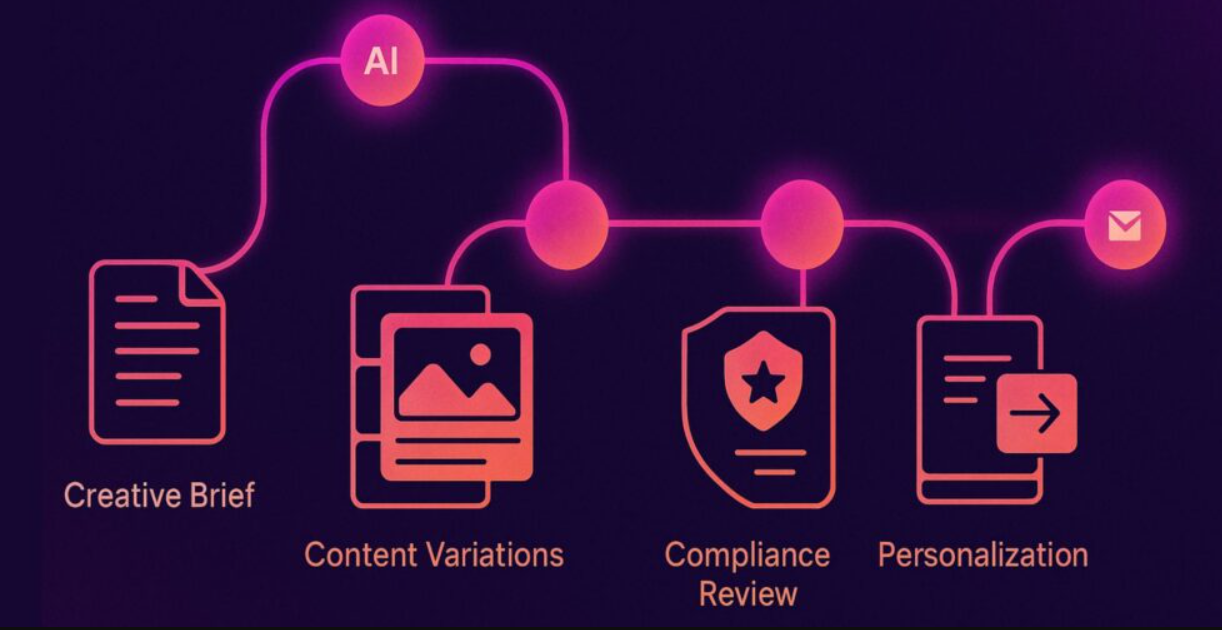
Let us explore how an AI Agent can manage a marketing campaign from start to finish:
- Detection & Scoring
When a user visits your website pricing page, the autonomous marketing tool detects this high-intent signal. It cross-references the user’s company profile and browsing data, scoring them as a “high-priority lead” to trigger a pre-planned workflow.
- Personalized Engagement
Within minutes, the user receives a personalized email from a sales rep. It mentions the exact industry challenge of the user’s company and drafts personalized content through AI. Simultaneously, the AI Agent also adds the user to a retargeting audience targeted for a relevant product demo video shown on social media.
- Adaptive Nurturing
When the user opens the email but doesn’t click, the agent notes it and sends a follow-up email 48 hours later. This follow-up email contains a different piece of content, a case study similar to the user’s company. If the user clicks the ‘Case Studies’ page on your company’s website now, the agent will trigger an in-app chat message that offers to answer the user’s questions.
- Hands-off and Learning
When Alex finally books a demo for the product, the AI agent logs the entire interaction history. It compiles a report and sends it to the CRM for the sales team, which records exactly which touchpoints the user interacted with. The sales team can then use this data to convert the user in person. Also, this data will be used by the AI agent to optimise its next lead conversion.
Thus, this seamless multi-touch AI workflow automation feels very personal and tailored to the user. This is achieved to a great extent without requiring almost any manual intervention from the marketing team. Even the leads generated are already high-quality and can be converted very easily by a sales representative.
Navigating the Risks and Governance of Autonomous Systems
Handing over the entire control of your marketing campaign to an AI agent comes with its own set of risks and responsibilities. It is important to recognize these risks and implement appropriate security measures to mitigate their impact.
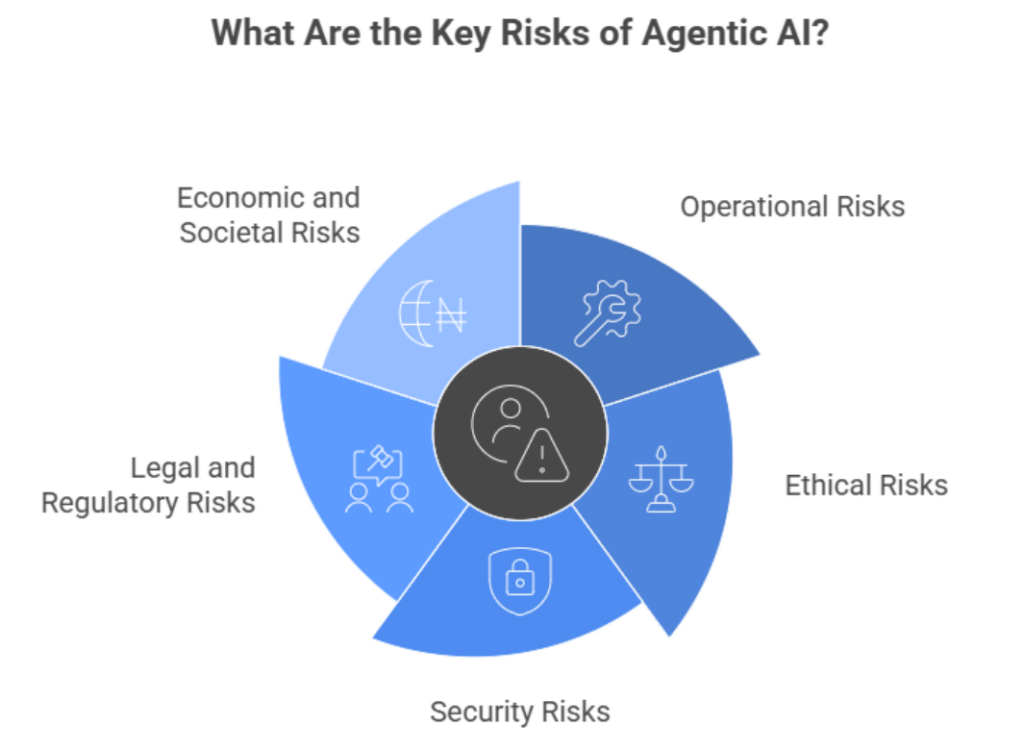
Risks of AI Agents
- Hallucinations and Wrong Actions
AI agents are notorious for producing incorrect information or performing actions simply to satisfy a user or automated request. This means that there is always a small chance that your AI agent might misinterpret data or launch an entire campaign for the wrong audience.
- Bias or Unfair Outcomes
Any autonomous system powered by AI is only as good as the data it is trained on. If the data contains societal biases, the agent may incorporate them into its own outputs. This can potentially lead to discriminatory ad targeting and customer segmentation, resulting in lawsuits and reputational damages.
- Strategic Misalignment
AI Agents are mainly dependent on the specific metrics and goals they are provided. If these goals are not aligned with the company’s overall mission, they can lead to deterioration in the brand’s long-term health. Moreover, this can lead to your marketing being misaligned with your brand and its values.
Strategies to Mitigate these Risks
Now that we know what potential risks are associated with using AI agents for your marketing campaigns, here is how you can implement a strong governance framework:
- Human-in-the-Loop (HITL)
It is vital to maintain human oversight of critical marketing decisions and campaign approvals to reduce the risk of automated errors.
- Manual Auditing
Ensure that the workflows the agent implements within the marketing campaign are reasonable and logical. Regular audits will ensure that everything stays on track and that minimal AI-related errors occur.
- Clear AI Usage Policy
A company-wide policy on AI agents and their capabilities is critical for safeguarding marketing campaigns. This informs how every team member can review and approve how AI agents handle sensitive information.
Building Your AI-First Marketing Stack
Every effective AI-agent marketing campaign requires the right technology stack. This requires not one, but multiple AI-enabled tools to create an integrated system.
Here are the core components of an ideal AI marketing campaign system:
| Component Category | Key Purpose | Examples | Critical Consideration |
| Workflow Orchestration Hub | Central logic & trigger system for cross-channel automation. | Gumloop, Zapier, Make, CRM automation studios. | Must have strong native app integrations and support for custom logic/LLMs. |
| Content & Creative Agents | Generate and adapt campaign copy, images, and video variants. | Jasper, Copy.ai, Adobe Firefly, Canva Magic Studio. | Output quality and brand voice consistency require human review. |
| Ad & Campaign Optimization Agents | Automate bidding, audience targeting, and creative testing. | Albert.ai, Acquisio, Google Performance Max. | Ability to connect spend directly to revenue (ROAS) and provide clear reporting. |
| Lead & Customer Engagement Agents | Handle lead scoring, personalized outreach, and customer support. | Warmly, Drift, HubSpot Breeze, Intercom. | Seamless integration with CRM/CDP for a unified customer view. |
| Data & Analytics Core | Provides clean, unified customer data for all agents. | AI-powered CRM (HubSpot, Salesforce), CDP (Segment, mParticle), DAM (Brandfolder). | Data quality and hygiene are foundational; agents fail with bad data. |
Conclusion: The Future of Autonomous Marketing
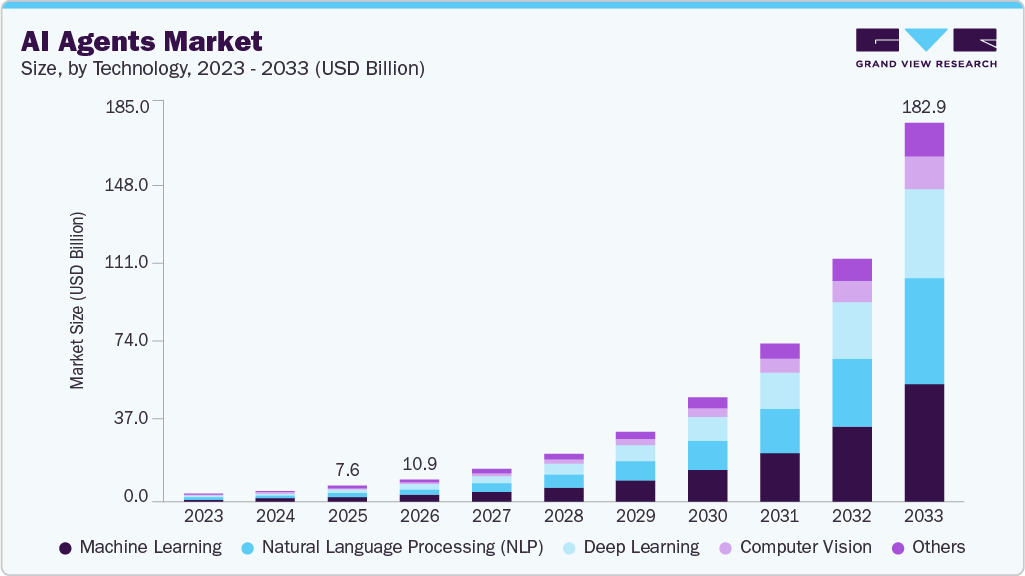
(Source: https://www.grandviewresearch.com/industry-analysis/ai-agents-market-report)
As global companies continue to increase their reliance on AI-based workflows, multi-agent systems are growing in popularity. Reports suggest that AI adoption in enterprises will reach 70% by the end of 2026. This suggests a global shift in how team collaboration and execution integrate AI functionality to deliver faster, more efficient results.
The global marketing industry in 2026 is one of the earliest adopters of this automation. AI agents for marketing automation can provide complex workflows and rapid results at an incredibly cost-effective price for future-facing brands. This has made it vital for every company to understand and implement AI within their existing workflows to gain better insights and wider customer reach.
As teams learn how to collaborate with these digital colleagues daily, autonomous marketing tools are empowering AI workflow automation that goes well beyond manual capabilities. Companies that are still reliant on manual processes for their daily tasks will soon fall behind and become obsolete.
Thus, transforming your current way of thinking and working is the only way to ensure better sustainability in a post-AI world.
FAQs
1. What are AI agents for marketing automation?
Think of them as your smart, digital co-workers. AI agents for marketing automation are software programs that can independently plan and execute tasks, like sending personalized emails or adjusting ad budgets, to achieve a goal you set for them.
2. How do AI agents actually save my team time?
They handle the repetitive, time-consuming work. Autonomous marketing tools excel at AI workflow automation, taking over jobs like building email sequences, creating multiple ad variants, or scoring leads 24/7, freeing your team to focus on big-picture strategy.
3. Is “campaign optimization AI” safe to use on its own?
It’s powerful but needs guardrails. While campaign optimization AI can tweak ads in real-time for better results, it’s best to start with human oversight. Set clear rules, review its decisions regularly, and keep a human in the loop for major campaign launches to ensure everything stays on brand.
4. What’s the first step to start using these AI agents?
Start small and specific. Don’t try to automate everything at once. Pick one clear task that’s draining your team’s time, like personalizing lead follow-ups, and find one autonomous marketing tool that solves it. A successful pilot builds confidence to expand.
5. Will AI agents replace marketing jobs?
They’re changing jobs, not replacing them. The future isn’t about machines taking over, but about marketers who use AI agents for marketing automation to amplify their work. Your role will shift more to strategy, creativity, and managing these intelligent tools to achieve better results.