
- What Are AI-Driven Attribution Models?
- How AI Attribution Can Uncover Hidden Truths in the Customer Journey
- Implementing AI Attribution: A Strategic Roadmap
- Key Tools and Models Using Machine Learning for Attribution
- ML Attribution Models
- Tools Using ML Attribution
- The Future of Attribution: AI Agents and Autonomous Optimization
- Conclusion
- FAQs
AI & Automation
AI-Driven Attribution Models: Measuring True Marketing ROI Across Channels
By Shraddha
published January 19, 2026
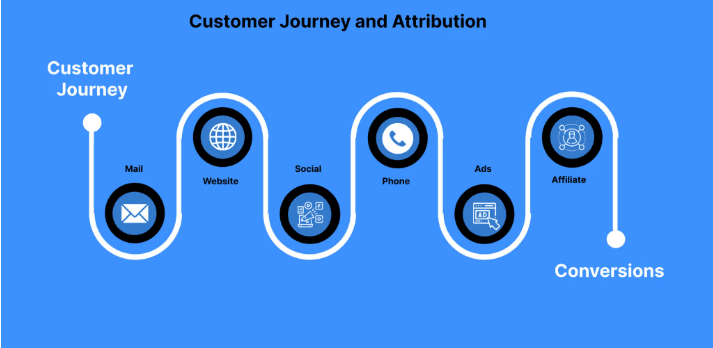
Even in 2026, more than 67% of B2B marketing teams still analyze only last-touch attribution for their campaigns. This is an outdated model that assumes that the final customer interaction is solely responsible for the entire customer journey. As this does not account for multi-channel factors, companies lose millions through budget misallocation. Marketers may waste 30-40% of their ad spend on outdated or ineffective channels.
To prevent this budget waste, AI attribution models for marketing are required. Using its advanced models, brands can measure the 27+ touchpoints that modern B2B buyers engage with before making their decision. These are advanced systems that use machine learning to deliver accurate omnichannel ROI measurement.
With incredible accuracy and exceptional reliability, these AI-powered models can reveal the true value of every dollar spent in your marketing.
What Are AI-Driven Attribution Models?

(Source:https://www.chat360.io/blog/ai-driven-lead-attribution-models-understanding-the-customer-journey)
Traditional multi-touch attribution in 2026 applies only fixed rules for distributing credits. Models like linear and time-decay are only simplistic approximations of reality.
However, when it comes to AI-based marketing analytics, there is a tremendous leap in advancement. Unlike before, when these models were dependent on predefined sets of rules, AI models can adapt these rules to their requirements. With sophisticated ML analytics, it is possible to analyze millions of customer experiences.
Think of the difference as using a supercomputer instead of a basic calculator. While the calculator is dependent solely on your inputs, the supercomputer isn’t. It is capable of learning on its own and finding answers you did not even know you needed.
The advanced analytics provided by AI deliver around 15-25% more accurate ROI measurement than previous models.
How AI Attribution Can Uncover Hidden Truths in the Customer Journey
(Source: https://growth-onomics.com/marketing-budget-forecasting-predictive-models/)
The primary capabilities of AI attribution models for marketing are:
- Revealing the real value of Top-Funnel Channels
Accounting only for last-touch models greatly undervalues awareness-building activities such as SEO and social media. With AI models, it is possible to detect the influence of early-stage blog articles on conversions. Their smart algorithms can map the entire buyer journey, from awareness to conversions.
This prevents brands from misjudging what actually led to a particular conversion. It helps prevent marketing teams from cutting the very channels that made a sale possible.
- Mapping Non-Linear and Cross-Device Buyer Journeys
Customers never move in a straight line when making their buying decision. They might see an advertisement on social media on their phone and convert weeks later through a retargeting ad on their desktop.
AI marketing analytics enables brands to easily understand these fragmented journeys. Their algorithms can track buyers across devices and over time, providing a more organic way to analyze campaign success.
- Predictive Optimization and Budget Allocation
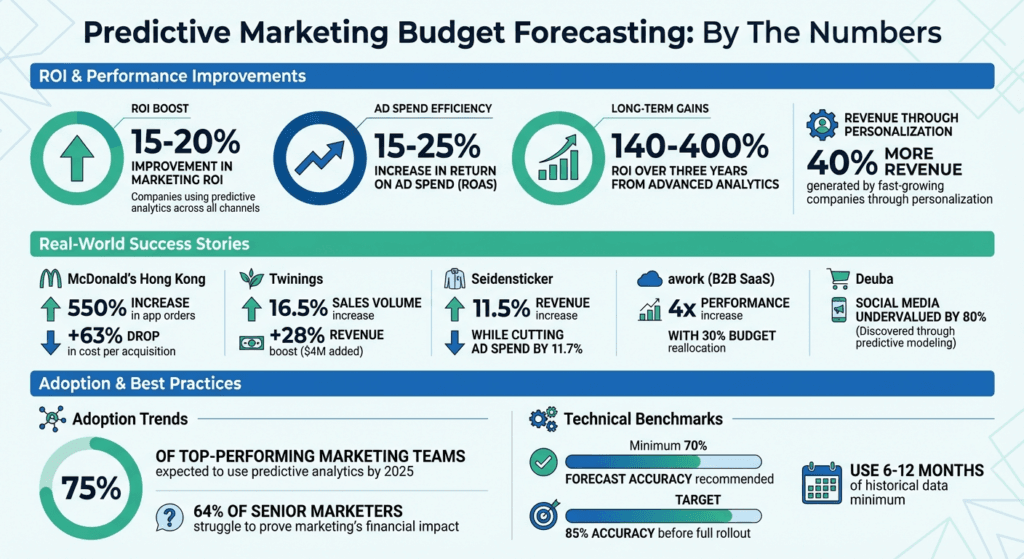
Advanced AI models can report buyer patterns of both the past and the present of a brand’s marketing. They can forecast which channels can combine to drive conversions.
These trends enable real-time omnichannel ROI measurement. This allows marketing teams to dynamically shift their ad spend for maximized returns.
Implementing AI Attribution: A Strategic Roadmap
Shifting to an AI-driven attribution system takes strategic planning. Here are the four key phases that will determine its success:
| Phase | Key Actions | Critical Outcome |
| 1. Data Foundation | Unify tracking across all channels; implement consistent UTM parameters and a Customer Data Platform (CDP). | Creates a single, reliable source of customer journey truth. |
| 2. Tool Selection | Evaluate platforms based on data volume, complexity, and budget. | Choose a technologically feasible and scalable solution. |
| 3. Model Configuration & Testing | Run AI models in parallel with old methods for 60-90 days to compare results and build trust. | Validates the model's accuracy and creates internal buy-in. |
| 4. Organizational Adoption | Train marketing teams to interpret insights and integrate them into planning. | Ensures data drives actual business decisions and budget moves. |
Every organization needs to test multiple models before fully committing to a specific attribution method. Statistics show that using predictive models for analysis can lead to 15-20% improvements in ROI.
Key Tools and Models Using Machine Learning for Attribution
(Source: https://easyinsights.ai/blog/how-to-use-data-driven-attribution-model-in-marketing/)
A successful execution of any AI SEO strategy in 2026 relies heavily on its execution. This requires a detailed understanding of the ML techniques and tools available for your marketing campaigns.
ML Attribution Models
The ML Models for attribution that can provide the most impact include:
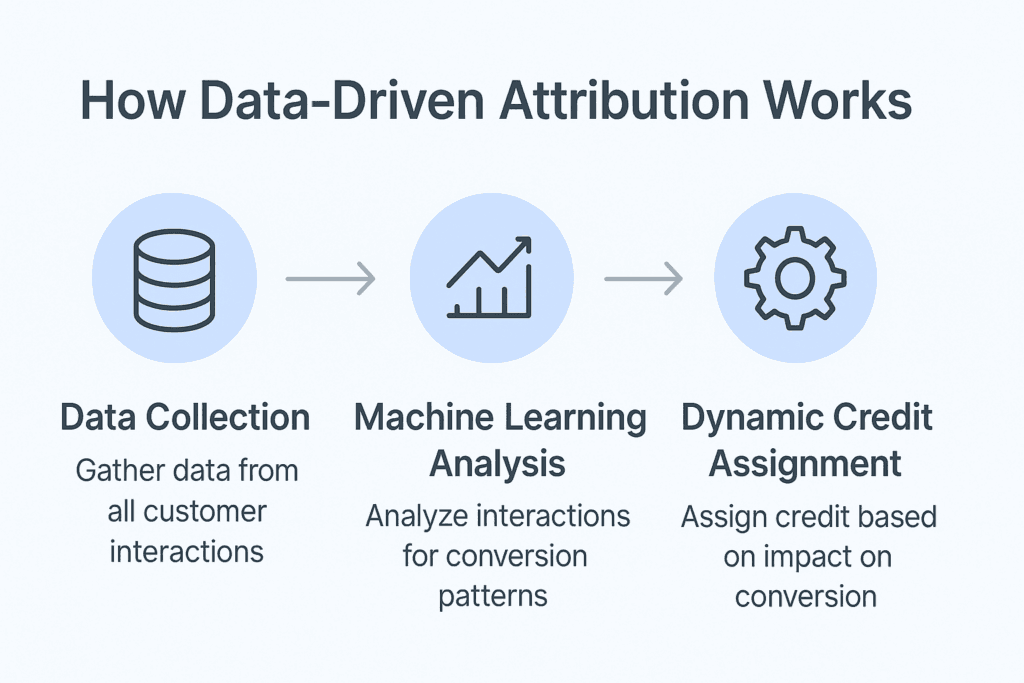
- Algorithmic or Data-Driven Models
These are advanced ML models that use historical conversion data to assign credits based on the buyers' actual influence.
- Markov Chain Models
In this technique, an automated model moves from one touchpoint to the next alongside the customer journey. This helps identify the exact interactions that were critical in influencing the final product conversion.
- Shapley Vale Attribution
This model calculates the marginal contribution of each marketing channel to the buyer journey. It does this by evaluating the channel’s impact across all possible combinations with other channels.
Tools Using ML Attribution
ML models work within powerful software platforms that support their implementation.
Here are a few examples you can use to evolve your marketing budgeting today:
| Tool Name | Key Feature | Best For |
| Google Analytics 4 (GA4) | Free, built-in ML model for cross-channel credit. | Beginners & Google Ads users. |
| Northbeam | ML-driven multi-touch attribution & unified reporting. | Data-driven DTC & e-commerce brands. |
| Ruler Analytics | ML models track calls & forms to close the revenue loop. | B2B & service businesses with calls. |
| Dreamdata | B2B revenue attribution & account-based analytics. | B2B SaaS with complex sales cycles. |
| Cometly | AI tracks ad spend to revenue to scale performance. | Performance marketers & agencies. |
| Triple Whale | E-com dashboard with AI-powered attribution & insights. | Shopify & e-commerce brands. |
The Future of Attribution: AI Agents and Autonomous Optimization
Multi-touch attribution in 2026 continues to evolve into a more dynamic and advantageous approach. Gartner predicts that an astounding 90% of B2B buying will be AI-agent intermediated by 2028. This shows that software bots and AI algorithms are soon going to govern what sells in the market.
As human buyers increasingly rely on AI to make purchasing decisions, a fundamental shift in marketing is underway. This will lead to significant changes in the industry, including:
- Gradual shift towards Agent Engine Optimization (AEO)
Just like traditional optimizations done for search engines (SEO), marketers will need to optimize their content, pricing data, and reviews for better AI agent visibility.
- Attribution models tracking machine-to-machine interactions
Almost every customer journey will include an interaction with AI agents that check the website for personalized recommendations. This requires a new form of tracking and credit assignment across the web and online marketplaces.
- Real-time automated campaign optimizations
With AI attribution models directly connected to execution platforms, automated budgeting will take over. This will result in real-time budget allocations to maximize the ROI of each marketing campaign.
Conclusion
The use of AI attribution models is emerging as a tactical direction-finder for most progressive marketing teams. These models can make intelligent investment decisions and confirm strategies that ensure a sustainable revenue growth trajectory.
In a few years, every leading brand will move beyond last-click illusions and integrate AI-driven credit allocation to drastically increase their ROI. It is longer about making a choice, but about making a strategic decision that can put your brand ahead of the curve.
FAQs
 Shraddha